AI: The Overnight Success 70 Years in the Making

If artificial intelligence feels brand new, there is a good reason: for most people, our direct relationship with it is.
A few years ago, most people weren't starting their morning by asking AI to summarize a document, organize a project, analyze data, or help think through a decision. Today, those interactions can happen before breakfast.
So AI can feel like a toddler—new, unpredictable, developing quickly, and suddenly everywhere.
But if we date the formal birth of the field to the 1956 Dartmouth workshop, AI turns 70 years old in 2026.[1] Many of the ideas underneath it are older still.
The pace of change is volatile. The foundations are not.
What feels sudden is the acceleration of technologies that have been under development for generations.
Six thresholds help tell the story:
STRUCTURE → IDENTITY → LEARNING → CONTEXT → ACCESS → ORCHESTRATION
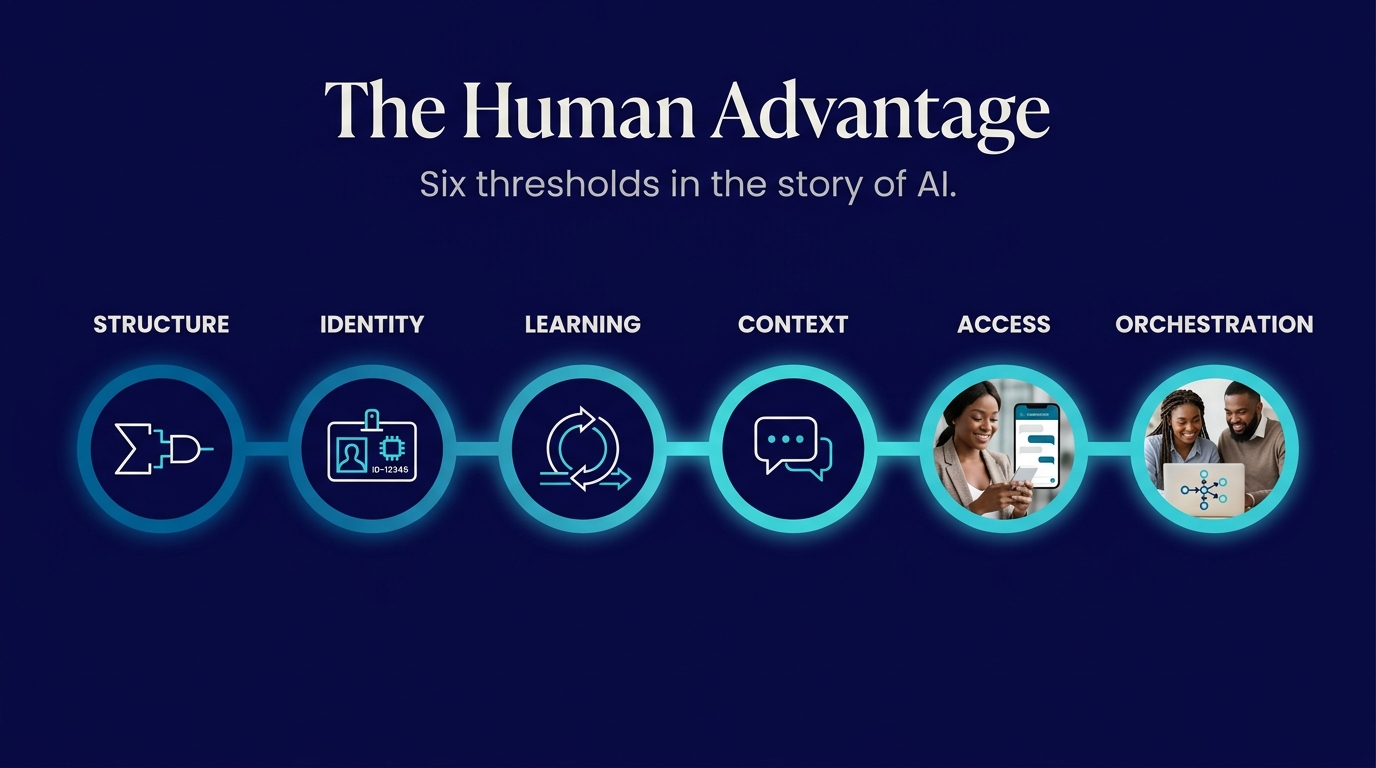
They overlap—technology rarely evolves in neat chapters—but each marks a point when something new became possible.
STRUCTURE
Before machines could learn, humans had to organize knowledge.
The story of artificial intelligence begins before the computer.
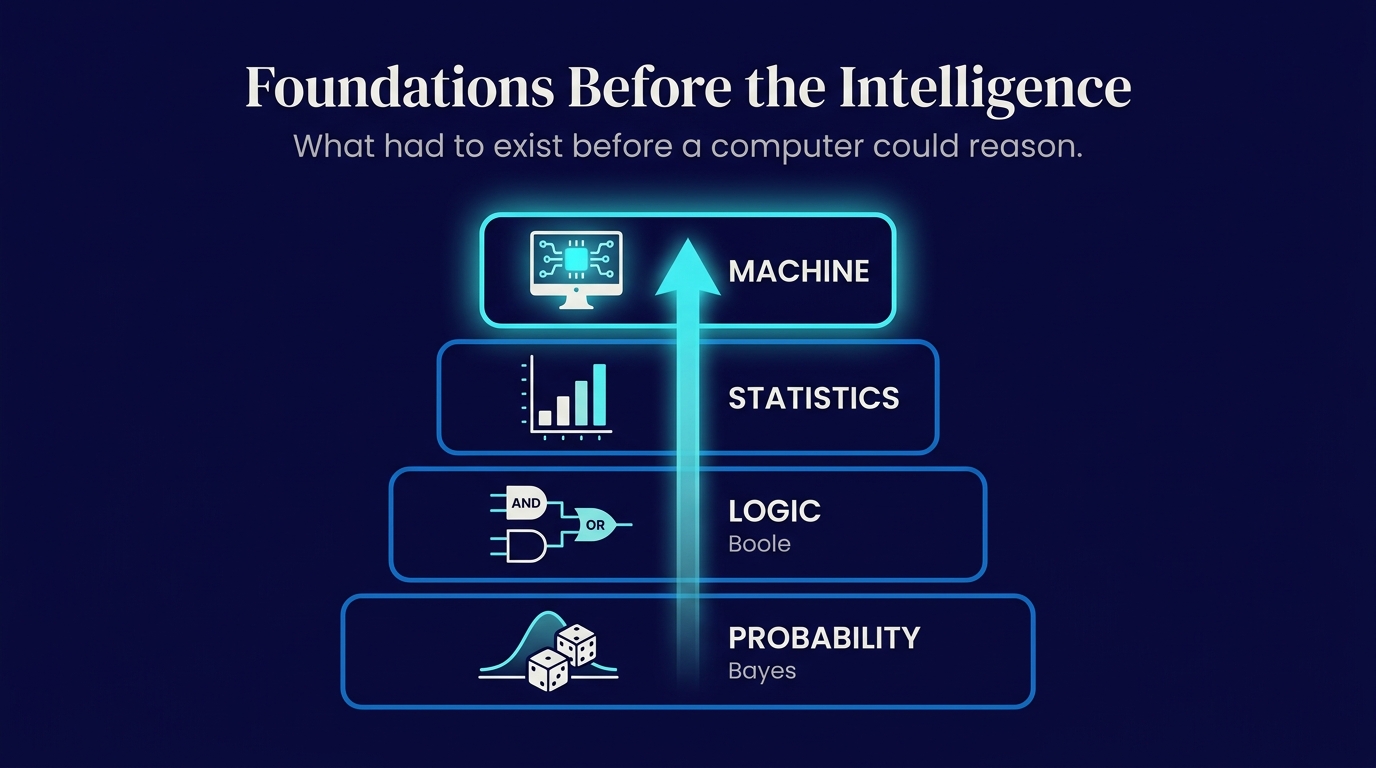
Humans first had to turn observations into data, identify patterns, test ideas, estimate what was likely, and draw conclusions.
That required ways to make reasoning more explicit.
How should we change what we believe when new evidence appears? Thomas Bayes helped formalize that kind of probabilistic reasoning.[2]
Can logical relationships be expressed as mathematical rules? George Boole showed that they could, creating a foundation for representing logic in a form machines could eventually process.[3]
Probability, logic, and statistics gave us ways to translate parts of human reasoning into structure.
We first had to make parts of reasoning structured enough for a machine to use.
The ideas came before the machinery.
IDENTITY
Then we gave the question a name.
By the middle of the 20th century, computers had entered the picture, but research on learning, language, reasoning, and machine intelligence was still scattered across disciplines.
Then, in the summer of 1956, a group of scientists gathered at Dartmouth College for a research project organized by John McCarthy and his colleagues. Their premise was ambitious: perhaps aspects of learning and understanding could be described precisely enough that a machine could simulate them. McCarthy gave that pursuit a name: artificial intelligence.[1]
Shared language creates connection. It gives people a common problem to organize around.
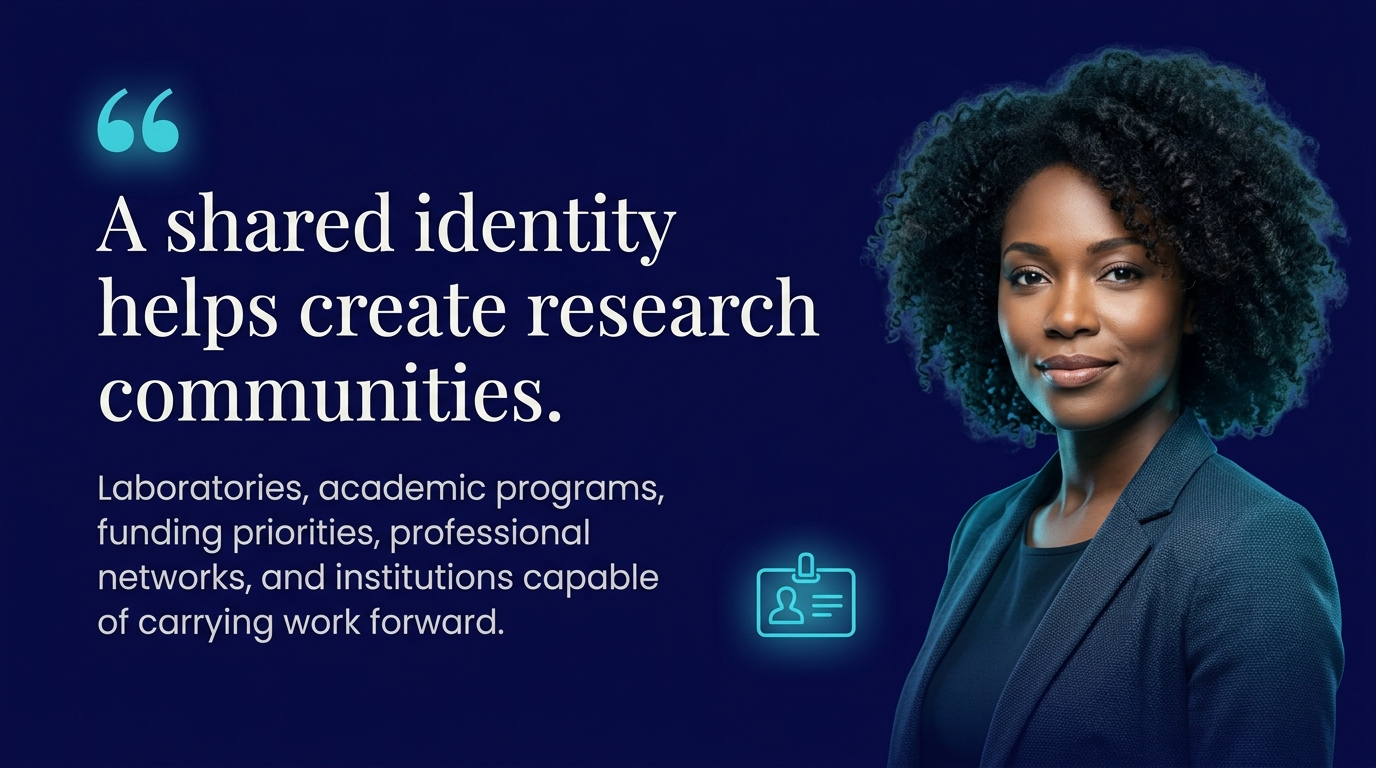
That shared identity gave the field places to grow.
McCarthy joined Stanford in the early 1960s and founded the Stanford Artificial Intelligence Laboratory in 1963. SAIL became one of the early institutional homes for sustained AI research, including pioneering work in computer vision, robotics, and interactive computing.[5][6]
AI was no longer only a question. It was becoming a field with institutions built to carry it forward.
LEARNING
Then machines stopped only following instructions.
There is a big difference between:
Follow the instructions I gave you.
and:
Use what happened before to improve what you do next.
Arthur Samuel's checkers experiments at IBM offer an early example. His program retained information about previous positions and outcomes and used that experience to improve future decisions through feedback and self-play.[7]

Machine learning existed decades before the boom most of us recognize today. What early researchers lacked was scale.
Over time, data became more abundant, storage cheaper, processors faster, and GPUs practical for increasingly complex learning systems. Stanford's AI100 history connects AI's resurgence to real-world data, improved algorithms, greater compute, and cheaper storage.[4]
Sometimes the breakthrough is not a brand-new idea. It is the moment the infrastructure finally catches up with it.
CONTEXT
Then machines had to make us make sense.
Numbers are relatively cooperative. Human language is not.
We imply things. Words shift with context. We use humor, shorthand, cultural references, tone, and assumptions that may never appear explicitly in a sentence.
Researchers had worked on natural-language processing for decades. But in 2011, IBM's Watson made both the challenge—and the progress—particularly visible when it competed on Jeopardy!
To answer a clue, Watson had to interpret the language, determine what was being asked, generate possible answers, search a large body of information, gather evidence, compare possibilities, estimate confidence, and respond quickly enough to compete with humans. IBM's DeepQA system combined those steps into a question-answering pipeline designed to rank candidate answers and calculate confidence.[8][9]
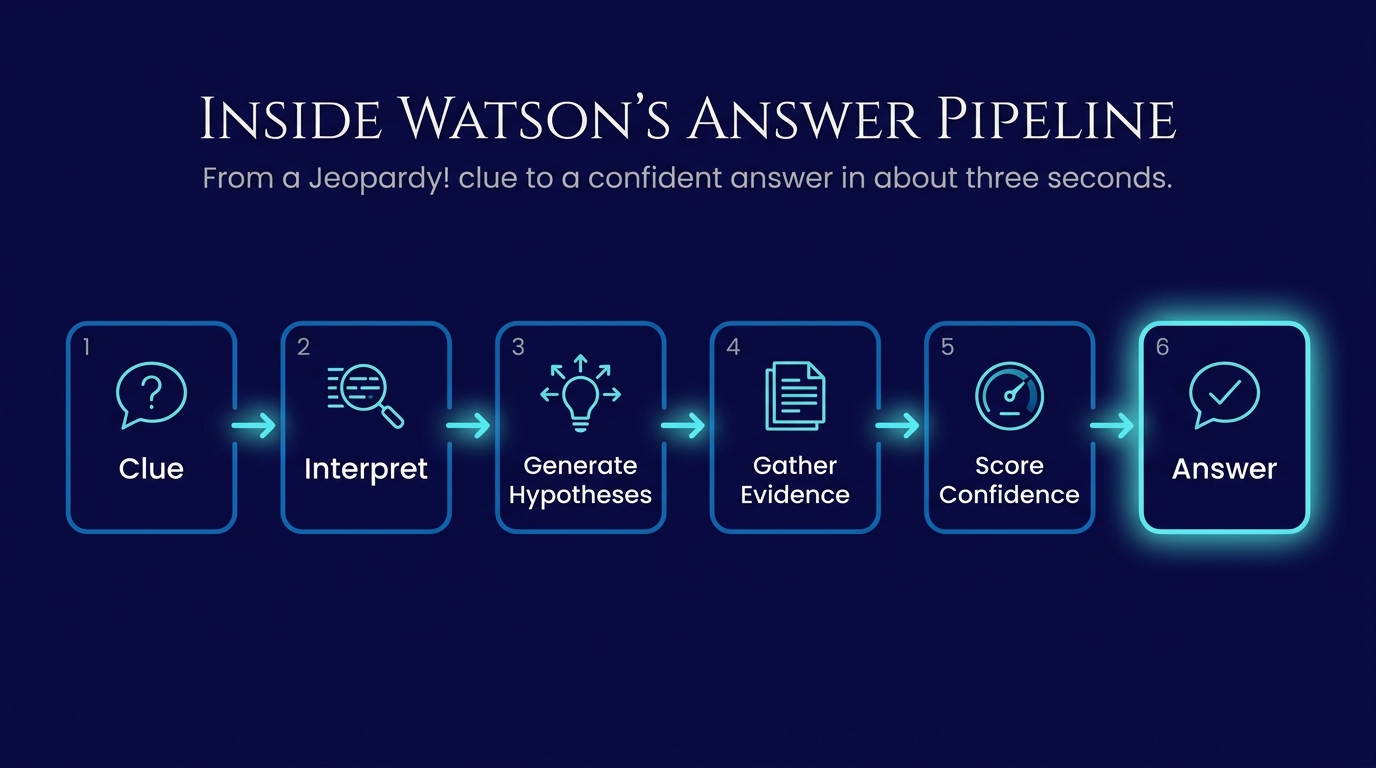
That combination is consequential.
The machine was increasingly able to work with information created by humans for humans:
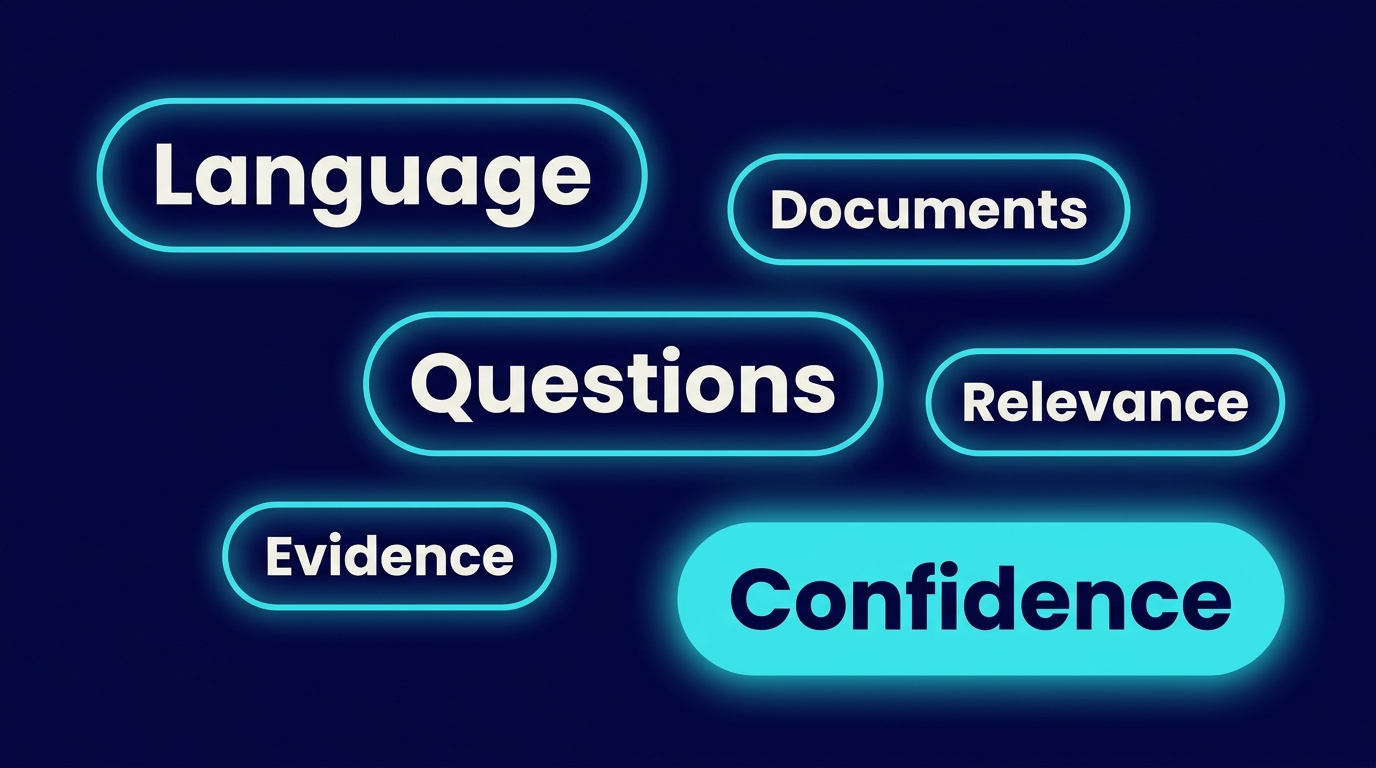
Watson wasn't today's generative AI, but it marked another threshold: machines were getting better at entering our information environment instead of requiring us to translate everything into theirs.
ACCESS
Then the technology came to us.
For decades, AI largely operated behind the scenes—in laboratories, companies, search engines, recommendation systems, medical technology, logistics, and specialized software.
Then broadly trained models became adaptable across many tasks. Stanford researchers described this emerging class as foundation models: models trained on broad data at scale and adaptable to many downstream uses.[10]
For most people, though, the breakthrough was simpler:
The interface became a conversation.
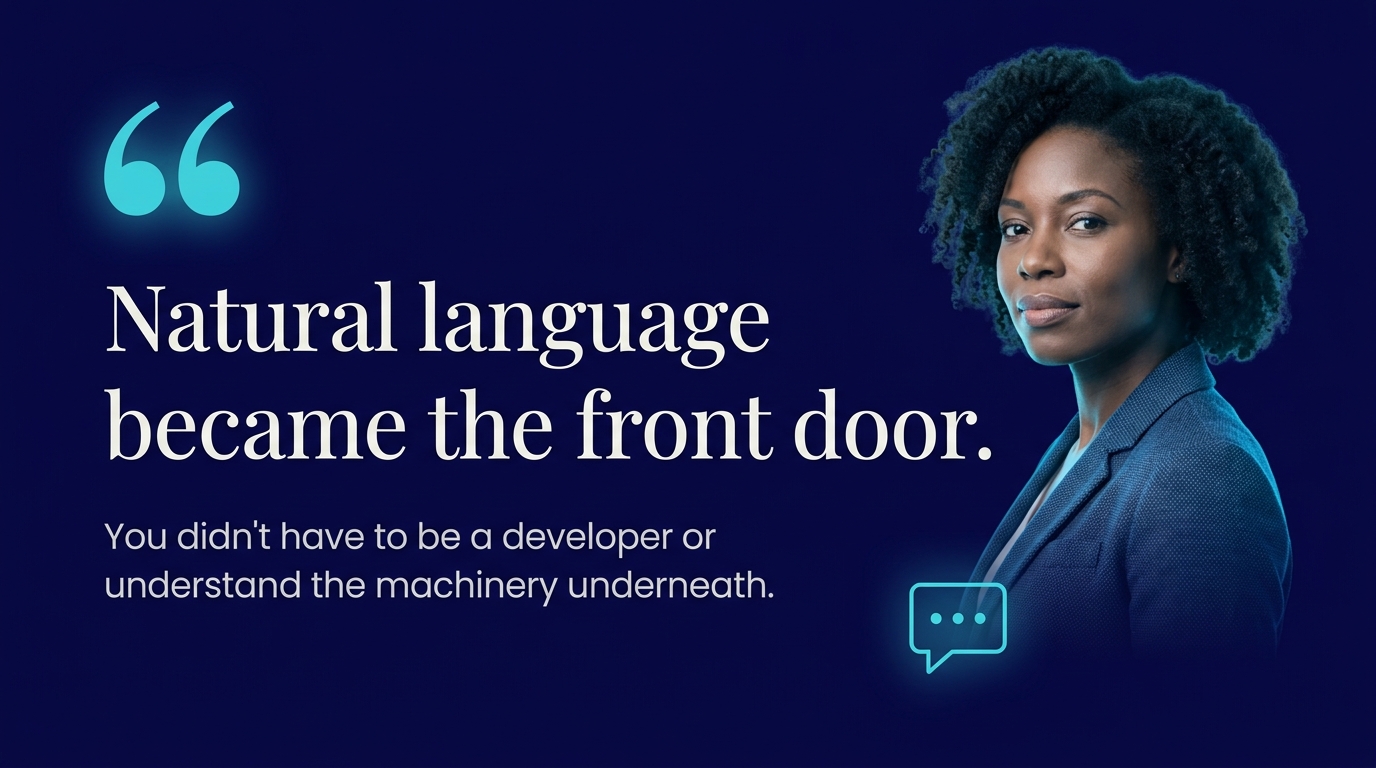
You could ask.
What changed for most of us was access.
That is why the early 2020s can feel like the beginning of AI. They weren't. They were the moment many of us finally met it.
ORCHESTRATION
And now AI is beginning to leave the chat.
The first wave of widespread generative AI was largely about producing something:
Write this. Summarize that. Analyze this. Create this.
The emerging agentic era changes the question from:
What can AI make for me?
to:
What can AI do for me?
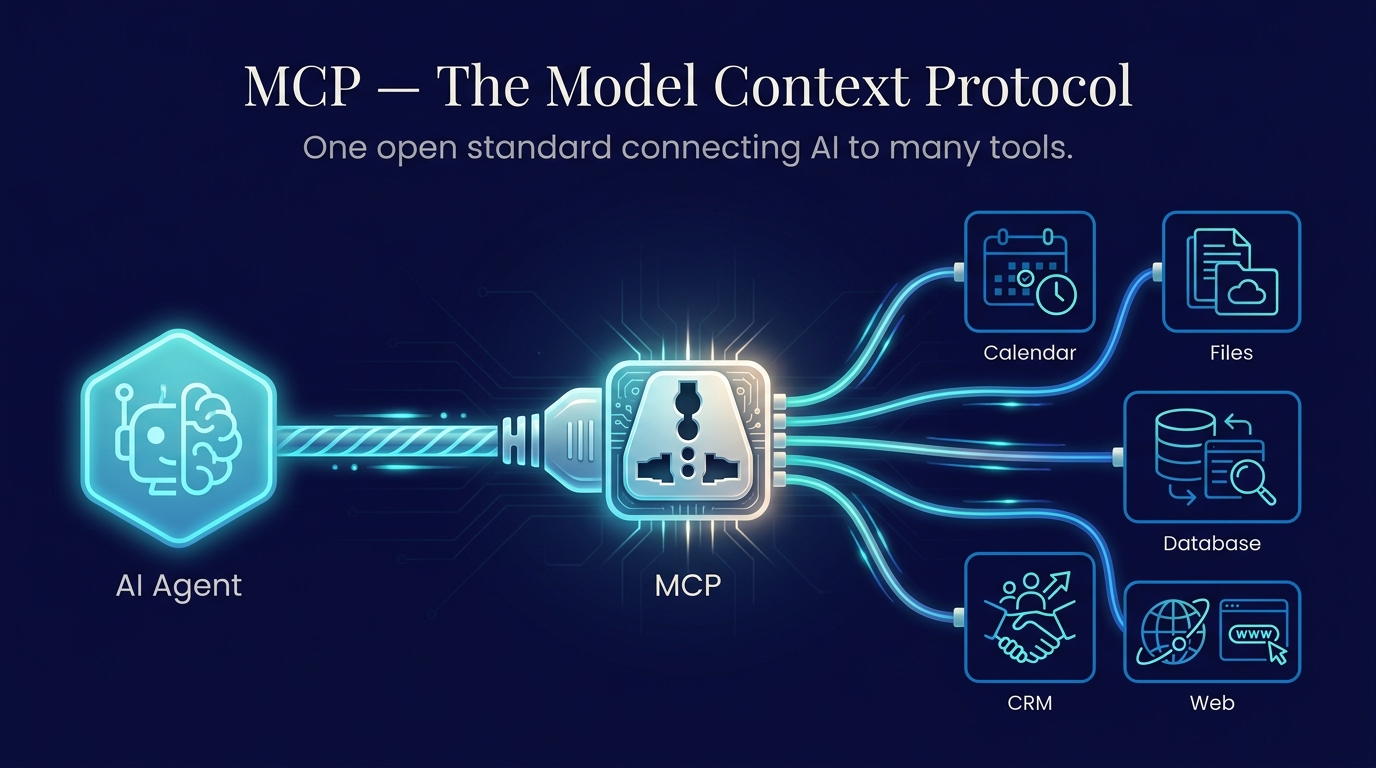
To take action, AI needs access to capabilities—files, calendars, databases, software, tools, and sometimes other agents.
For most of computing history, the human has moved between separate software systems to assemble the work. Agentic technology begins to reverse that relationship.
MCP—the Model Context Protocol—is one piece of that emerging infrastructure. Introduced in 2024, it provides an open standard for connecting AI systems with external tools and data.[11]
Then comes another question: What happens when one agent needs another?
The Agent2Agent protocol provides an open standard intended to let agents built on different frameworks communicate and collaborate.[12]
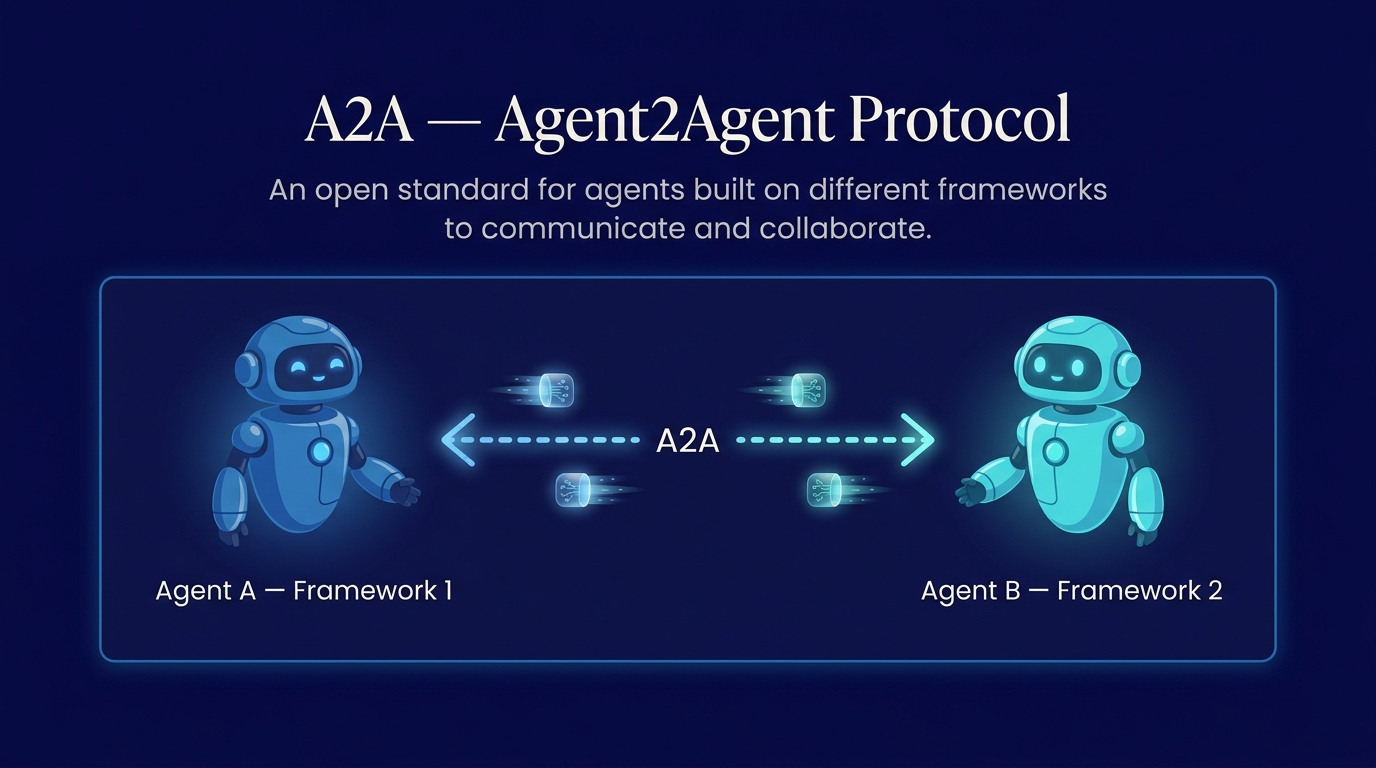
At this point, the architecture starts to look surprisingly human: generalists, specialists, reusable skills, and coordination. Skills give an AI system a repeatable playbook for particular work.[13]
And orchestration determines how those pieces work together around the goal.
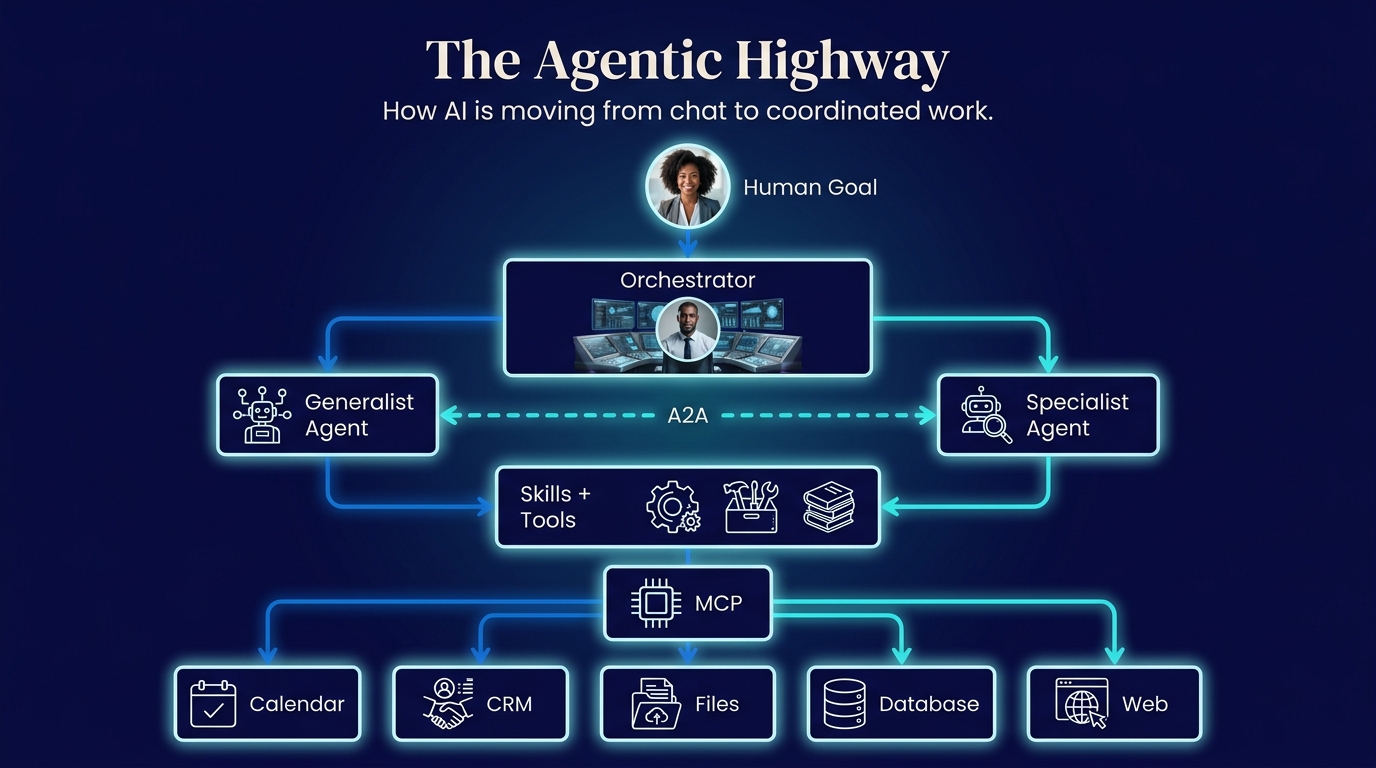
That shift changes where the human spends effort.
Rather than stitching each step together by hand, we can increasingly start with what needs to be accomplished and let the system handle more of the routing in between.
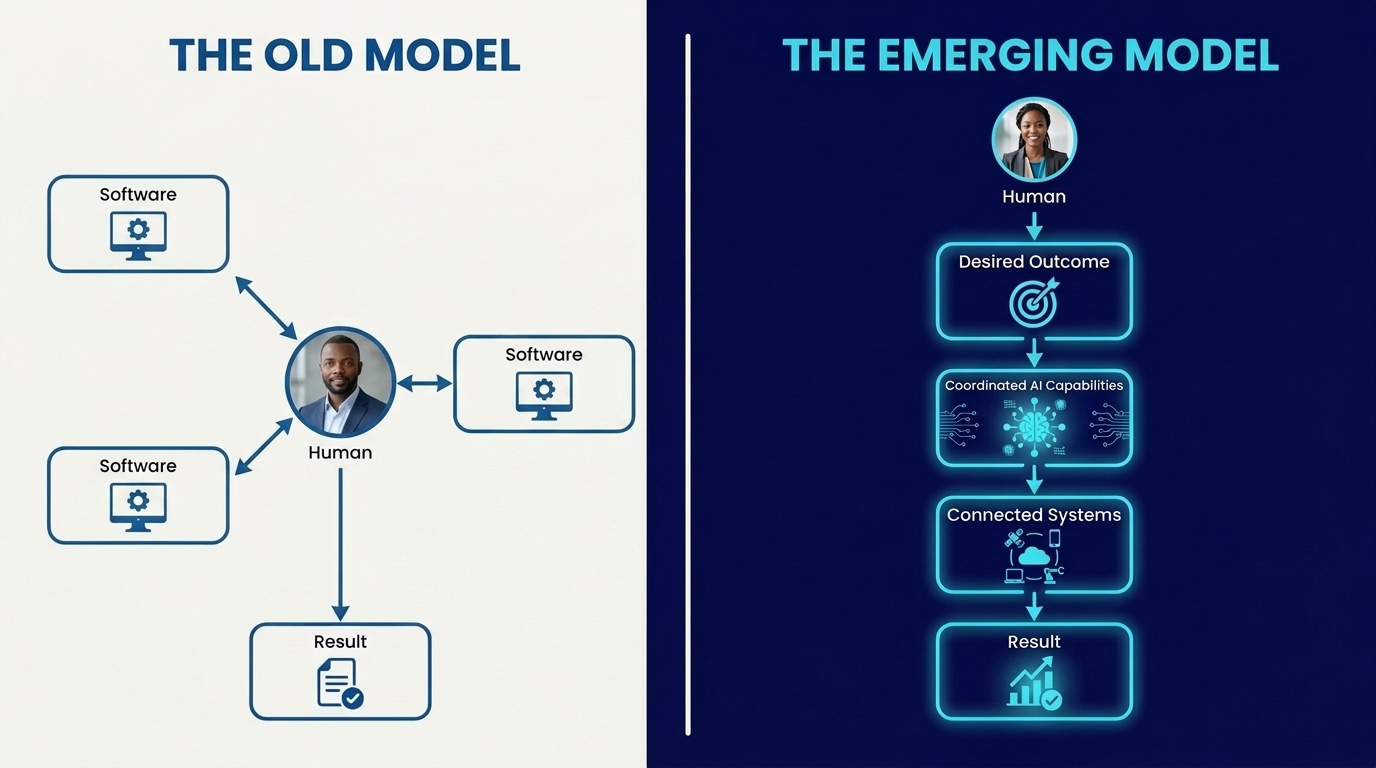
We aren't completely there. Platforms still have different rules, permissions, standards, and limitations.
But the direction is clear:
The capability is becoming less tied to the container.
The latest branch is not the whole tree.
The breakthrough feels sudden because the build was mostly invisible.
Most of us encountered AI near the top of the tree, after decades of work had already taken place below the surface.
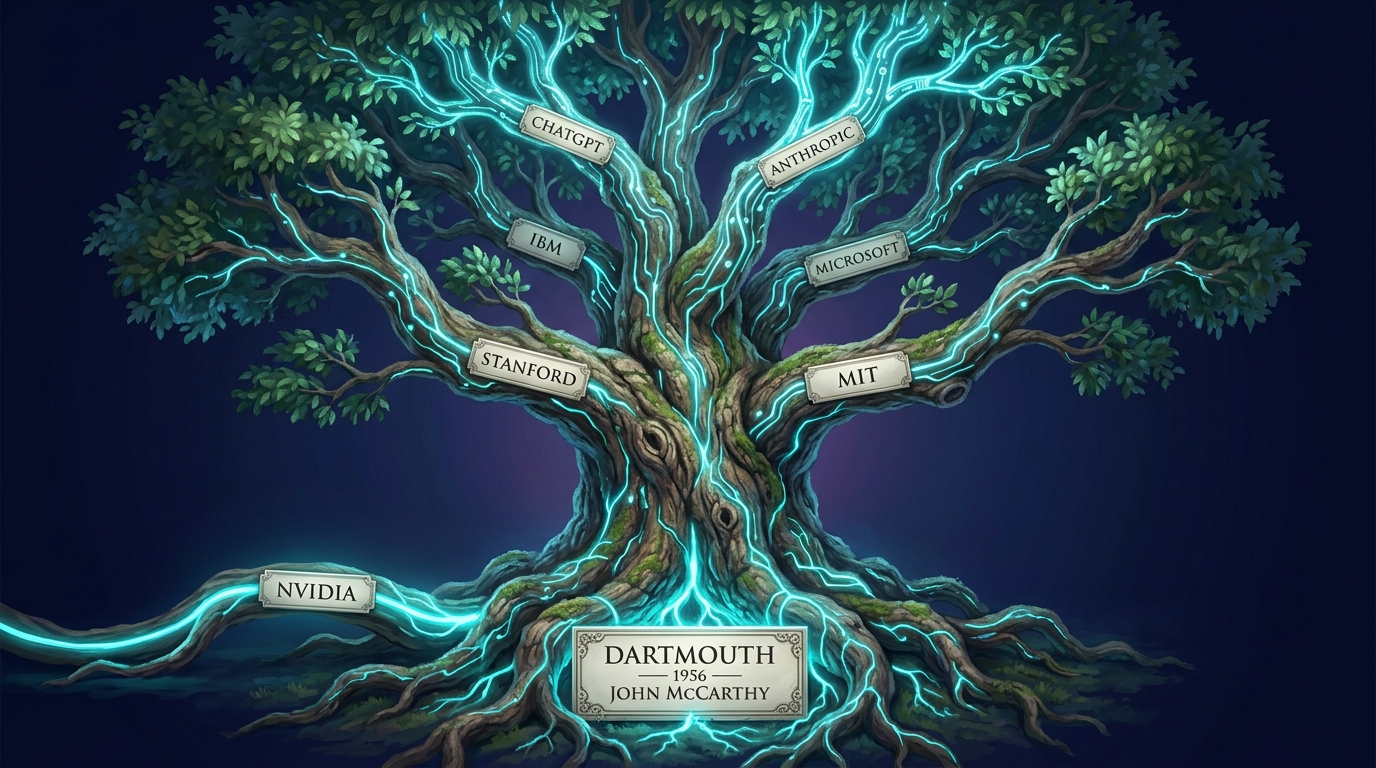
Now access is expanding quickly. Capabilities that once lived inside research labs, specialized institutions, and technical teams are reaching everyday workflows.
That shift widens the stakes. As AI becomes more embedded in how we work, learn, build, and make decisions, the range of people shaping its future becomes more important.
Sources
Historical foundations and institutional development
- Dartmouth — Our Story: Where AI Was Born — the 1956 Dartmouth Summer Research Project and John McCarthy's role in naming the field.
- PMC — Bayes theorem overview — explanation of Bayesian reasoning and how probability is updated as new evidence becomes available.
- ScienceDirect Topics — Boolean Logic — overview of Boolean logic and the mathematical representation of logical relationships.
- Stanford AI100 — Appendix I: A Short History of AI — intellectual foundations, early AI research, machine learning, NLP, and the later data-driven resurgence.
- Stanford Artificial Intelligence Laboratory — About — SAIL's 1963 founding by John McCarthy and Stanford's institutional AI legacy.
- Stanford University — Our History — Stanford's historical account of SAIL and its early work in computer vision, robotics, and interactive computing.
Machine learning, language, and foundation models
- IBM — The Games That Helped AI Evolve — Arthur Samuel's checkers work, learning from experience, self-play, and the role of games as AI testbeds.
- IBM — Watson and Jeopardy! — Watson's public question-answering milestone.
- IBM Research — Building Watson: An Overview of the DeepQA Project — Watson's hypothesis generation, evidence scoring, ranking, and confidence architecture.
- Stanford CRFM — On the Opportunities and Risks of Foundation Models — definition of foundation models, broad pretraining, adaptation, scale, and downstream reuse.
Agentic infrastructure
- Anthropic — Introducing the Model Context Protocol — MCP as an open standard for connecting AI systems with tools and external data.
- Agent2Agent Protocol — Official Documentation — A2A as an open standard for agent interoperability, originally developed by Google and now governed through the Linux Foundation.
- OpenAI — Skills in ChatGPT — skills as reusable workflows containing instructions, examples, resources, and code.


